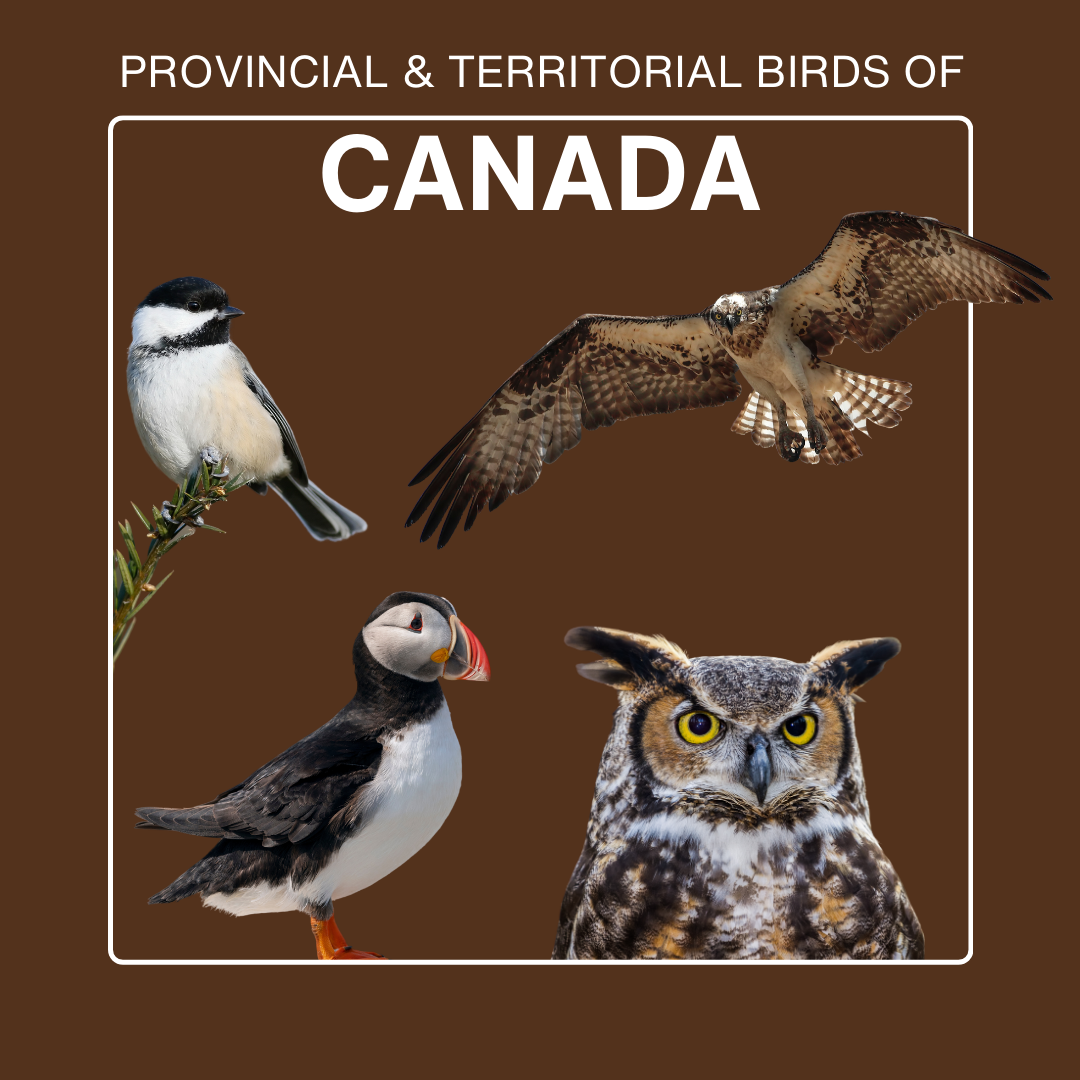
This is a list of bird species confirmed in Canada. Unless otherwise noted, the list is that of Bird Checklists of the World as of July 2022. Of the 704 species listed here, 236 are accidental. Twelve species were introduced to North America or directly to Canada, three species are extinct, and three (possibly four) have been extirpated. One species of uncertain origin is also included.
This list is presented in the taxonomic sequence of the Check-list of North and Middle American Birds, 7th edition through the 63rd Supplement, published by the American Ornithological Society (AOS). Common and scientific names are also those of the Check-list, except that the common names of families are from the Clements taxonomy because the AOS list does not include them.
Canadian birds most closely resemble those of Eurasia, which was connected to the continent as part of the supercontinent Laurasia until around 60 million years ago. Many families which occur in Canada are also found throughout the Northern Hemisphere or worldwide. However, some families are unique to the New World; those represented in this list are the hummingbirds, the New World vultures, the New World quail, the tyrant flycatchers, the mimids, the wood-warblers, the cardinals, and the icterids. Three species on the list (Ross's goose, whooping crane, and Harris's sparrow) breed only in Canada. The extinct Labrador duck is also believed to have been a breeding endemic, though its breeding areas are not known.
Unless otherwise noted, all species listed below are considered to occur regularly in Canada as permanent residents, summer or winter visitors, or migrants. These tags are used to annotate some species:
- (A) Accidental - a species that rarely or accidentally occurs in Canada
- (I) Introduced - a species introduced to Canada as a consequence, direct or indirect, of human actions
- (E) Extinct - a recent species which no longer exists
- (Ex) Extirpated - a species which no longer occurs in Canada but exists elsewhere
Population status symbols are those of the Red List published by the International Union for Conservation of Nature (IUCN). The symbols apply to the species' worldwide status, not their status solely in Canada. The symbols and their meanings, in decreasing order of peril, are:
Ducks, geese, and waterfowl
Order: Anseriformes Family: Anatidae
The family Anatidae includes the ducks and most duck-like waterfowl, such as geese and swans. These birds are adapted to an aquatic existence with webbed feet, bills which are flattened to a greater or lesser extent, and feathers that are excellent at shedding water due to special oils.
New World quail
Order: Galliformes Family: Odontophoridae
The New World quails are small, plump terrestrial birds only distantly related to the quails of the Old World, but named for their similar appearance and habits.
- Mountain quail, Oreortyx ictus (I) LC
- Northern bobwhite, Colinus virginianus NT
- California quail, Callipepla californica (I) LC
Pheasants, grouse, and allies
Order: Galliformes Family: Phasianidae
Phasianidae consists of the pheasants and their allies. These are terrestrial species, variable in size but generally plump with broad relatively short wings. Many species are gamebirds or have been domesticated as a food source for humans.
- Wild turkey, Meleagris gallopavo LC
- Ruffed grouse, Bonasa umbellus LC
- Greater sage-grouse, Centrocercus urophasianus NT
- Spruce grouse, Canachites canadensis LC
- Willow ptarmigan, Lagopus lagopus LC
- Rock ptarmigan, Lagopus muta LC
- White-tailed ptarmigan, Lagopus leucura LC
- Dusky grouse, Dendragapus obscurus LC
- Sooty grouse, Dendragapus fuliginosus LC
- Sharp-tailed grouse, Tympanuchus phasianellus LC
- Greater prairie-chicken, Tympanuchus cupido (Ex) NT
- Grey partridge, Perdix perdix (I) LC
- Ring-necked pheasant, Phasianus colchicus (I) LC
- Silver pheasant, Lophura nycthemera (I) (LC)
- Chukar, Alectoris chukar (I) LC
Flamingos
Order: Phoenicopteriformes Family: Phoenicopteridae
Flamingos (genus Phoenicopterus monotypic in family Phoenicopteridae) are gregarious wading birds, usually 3 to 5 feet (0.9 to 1.5 m) tall, found in both the Western and Eastern Hemispheres. Flamingos filter-feed on shellfish and algae. Their oddly-shaped beaks are specially adapted to separate mud and silt from the food they consume and, uniquely, are used upside-down.
- American flamingo, Phoenicopterus ruber (A) LC
Grebes
Order: Podicipediformes Family: Podicipedidae
Grebes are small to medium-large freshwater diving birds. They have lobed toes and are excellent swimmers and divers. However, they have their feet placed far back on the body, making them quite ungainly on land.
- Pied-billed grebe, Podilymbus podiceps LC
- Horned grebe, Podiceps auritus VU
- Red-necked grebe, Podiceps grisegena LC
- Eared grebe, Podiceps nigricollis LC
- Western grebe, Aechmophorus occidentalis LC
- Clark's grebe, Aechmophorus clarkii LC
Pigeons and doves
Order: Columbiformes Family: Columbidae
Pigeons and doves are stout-bodied birds with short necks and short slender bills with a fleshy cere.
- Rock pigeon, Columba livia (I) LC
- Common wood pigeon, Columba palumbus (A) LC
- White-crowned pigeon, Patagioenas leucocephala (A) NT
- Band-tailed pigeon, Patagioenas fasciata LC
- Oriental turtle-dove, Streptopelia orientalis (A) LC
- Eurasian collared-dove, Streptopelia decaocto (I) LC
- Passenger pigeon, Ectopistes migratorius (E) EX
- Inca dove, Columbina inca (A) LC
- Common ground dove, Columbina passerina (A) LC
- White-winged dove, Zenaida asiatica (A) LC
- Mourning dove, Zenaida macroura LC
Cuckoos
Order: Cuculiformes Family: Cuculidae
The family Cuculidae includes cuckoos, roadrunners, and anis. These birds are of variable size with slender bodies, long tails, and strong legs.
- Groove-billed ani, Crotophaga sulcirostris (A) LC
- Common cuckoo, Cuculus canorus (A) LC
- Yellow-billed cuckoo, Coccyzus americanus LC
- Black-billed cuckoo, Coccyzus erythropthalmus LC
Nightjars and allies
Order: Caprimulgiformes Family: Caprimulgidae
Nightjars are medium-sized nocturnal birds that usually nest on the ground. They have long wings, short legs, and very short bills. Most have small feet, of little use for walking, and long pointed wings. Their soft plumage is cryptically coloured to resemble bark or leaves.
- Lesser nighthawk, Chordeiles acutipennis LC
- Common nighthawk, Chordeiles minor LC
- Common poorwill, Phalaenoptilus nuttallii LC
- Chuck-will's-widow, Antrostomus carolinensis LC
- Eastern whip-poor-will, Antrostomus vociferus NT
Swifts
Order: Apodiformes Family: Apodidae
The swifts are small birds which spend the majority of their lives flying. These birds have very short legs and never settle voluntarily on the ground, perching instead only on vertical surfaces. Many swifts have long swept-back wings which resemble a crescent or boomerang.
- Black swift, Cypseloides niger VU
- White-collared swift, Streptoprocne zonaris (A) LC
- Chimney swift, Chaetura pelagica VU
- Vaux's swift, Chaetura vauxi LC
- Common swift, Apus apus (A) LC
- Pacific swift, Apus pacificus (A) LC
- House swift, Apus nipalensis LC
- White-throated swift, Aeronautes saxatalis LC
Hummingbirds
Order: Apodiformes Family: Trochilidae
Hummingbirds are small birds capable of hovering in mid-air due to the rapid flapping of their wings. They are the only birds that can fly backwards.
- Mexican violetear, Colibri thalassinus (A) LC
- Rivoli's hummingbird, Eugenes fulgens (A) (Not yet assessed by the IUCN)
- Amethyst-throated mountain-gem, Lampornis amethystinus (A) LC
- Ruby-throated hummingbird, Archilochus colubris LC
- Black-chinned hummingbird, Archilochus alexandri LC
- Anna's hummingbird, Calypte anna LC
- Costa's hummingbird, Calypte costae (A) LC
- Calliope hummingbird, Selasphorus calliope LC
- Rufous hummingbird, Selasphorus rufus NT
- Broad-tailed hummingbird, Selasphorus platycercus (A) LC
- Broad-billed hummingbird, Cynanthus latirostris (A) LC
- Xantus's hummingbird, Basilinna xantusii (A) LC
Rails, gallinules, and coots
Order: Gruiformes Family: Rallidae
Rallidae is a large family of small to medium-sized birds which includes the rails, crakes, coots, and gallinules. Typically, family members occupy dense vegetation in damp environments near lakes, swamps, and rivers. In general they are shy and secretive birds, making them difficult to observe. Most species have strong legs and long toes which are well adapted to soft uneven surfaces. They tend to have short, rounded wings and to be weak flyers.
- Clapper rail, Rallus crepitans (A) LC
- King rail, Rallus elegans NT
- Virginia rail, Rallus limicola LC
- Corn crake, Crex crex (A) LC
- Sora, Porzana carolina LC
- Common gallinule, Gallinula galeata LC
- Eurasian coot, Fulica atra (A) LC
- American coot, Fulica americana LC
- Purple gallinule, Porphyrio martinicus (A) LC
- Yellow rail, Coturnicops noveboracensis LC
- Black rail, Laterallus jamaicensis (A) LC
Limpkin
Order: Gruiformes Family: Aramidae
The limpkin is an odd bird that looks like a large rail, but is skeletally closer to the cranes. It is found in marshes with some trees or scrub in the Caribbean, South America, and southern Florida.
- Limpkin, Aramus guarauna (A) LC
Cranes
Order: Gruiformes Family: Gruidae
Cranes are large, long-legged, and long-necked birds. Unlike the similar-looking, but unrelated, herons, cranes fly with their necks outstretched, not pulled back. Most have elaborate and noisy courting displays.
- Sandhill crane, Antigone canadensis LC
- Common crane, Grus grus (C) LC
- Whooping crane, Grus americana EN
Stilts and avocets
Order: Charadriiformes Family: Recurvirostridae
Recurvirostridae is a family of large wading birds which includes the avocets and stilts. The avocets have long legs and long up-curved bills. The stilts have extremely long legs and long, thin, straight bills.
- Black-necked stilt, Himantopus mexicanus LC
- American avocet, Recurvirostra americana LC
Oystercatchers
Order: Charadriiformes Family: Haematopodidae
The oystercatchers are large, obvious and noisy plover-like birds, with strong bills used for smashing or prying open molluscs.
- Eurasian oystercatcher, Haematopus ostralegus (A) NT
- American oystercatcher, Haematopus palliatus (A) LC
- Black oystercatcher, Haematopus bachmani LC
Plovers and lapwings
Order: Charadriiformes Family: Charadriidae
The family Charadriidae includes the plovers, dotterels, and lapwings. They are small to medium-sized birds with compact bodies, short thick necks, and long, usually pointed, wings. They are found in open country worldwide, mostly in habitats near water.
- Northern lapwing, Vanellus vanellus (A) NT
- Black-bellied plover, Pluvialis squatarola LC
- European golden-plover, Pluvialis apricaria (A) LC
- American golden-plover, Pluvialis dominica LC
- Pacific golden-plover, Pluvialis fulva (A) LC
- Eurasian dotterel, Charadrius morinellus (A) LC
- Killdeer, Charadrius vociferus LC
- Common ringed plover, Charadrius hiaticula LC
- Semipalmated plover, Charadrius semipalmatus LC
- Piping plover, Charadrius melodus NT
- Lesser sand-plover, Charadrius mongolus (A) LC
- Wilson's plover, Charadrius wilsonia (A) LC
- Snowy plover, Charadrius nivosus (A) NT
- Mountain plover, Charadrius montanus NT
Sandpipers and allies
Order: Charadriiformes Family: Scolopacidae
Scolopacidae is a large, diverse family of small to medium-sized shorebirds including the sandpipers, curlews, godwits, shanks, tattlers, woodcocks, snipes, dowitchers, and phalaropes. The majority of these species eat small invertebrates picked out of the mud or soil. Different lengths of legs and bills enable multiple species to feed in the same habitat, particularly on the coast, without directly competing for food.
Skuas and jaegers
Order: Charadriiformes Family: Stercorariidae
Skuas are, in general, medium to large birds, typically with grey or brown plumage, often with white markings on the wings. They have longish bills with hooked tips and webbed feet with sharp claws. They look like large dark gulls, but have a fleshy cere above the upper mandible. They are strong, acrobatic fliers.
- Great skua, Stercorarius skua (A) LC
- South polar skua, Stercorarius maccormicki LC
- Brown skua, Stercorarius lonnbergi (A) LC
- Pomarine jaeger, Stercorarius pomarinus LC
- Parasitic jaeger, Stercorarius parasiticus LC
- Long-tailed jaeger, Stercorarius longicaudus LC
Auks, murres, and puffins
Order: Charadriiformes Family: Alcidae
Alcids are superficially similar to penguins due to their black-and-white colours, their upright posture, and some of their habits. However they are only distantly related to the penguins and are able to fly. Auks live on the open sea, only deliberately coming ashore to nest.
Gulls, terns, and skimmers
Order: Charadriiformes Family: Laridae
Laridae is a family of medium to large seabirds and includes gulls, terns, and skimmers. Gulls are typically grey or white, often with black markings on the head or wings. They have stout, longish bills, and webbed feet. Terns are a group of generally medium to large seabirds typically with grey or white plumage, often with black markings on the head. Most terns hunt fish by diving but some pick insects off the surface of fresh water. Terns are generally long-lived birds, with several species known to live in excess of 30 years. Skimmers are a small family of tropical tern-like birds. They have an elongated lower mandible which they use to feed by flying low over the water surface and skimming the water for small fish.
Tropicbirds
Order: Phaethontiformes Family: Phaethontidae
Tropicbirds are slender white birds of tropical oceans with exceptionally long central tail feathers. Their long wings have black markings, as does the head.
- White-tailed tropicbird, Phaethon lepturus (A) LC
- Red-billed tropicbird, Phaethon aethereus (A) LC
- Red-tailed tropicbird, Phaethon rubricauda (A) LC
Loons
Order: Gaviiformes Family: Gaviidae
Loons are aquatic birds the size of a large duck, to which they are unrelated. Their plumage is largely grey or black, and they have spear-shaped bills. Loons swim well and fly adequately, but, because their legs are placed towards the rear of the body, are almost helpless on land.
- Red-throated loon, Gavia stellata LC
- Arctic loon, Gavia arctica (A) LC
- Pacific loon, Gavia pacifica LC
- Common loon, Gavia immer LC
- Yellow-billed loon, Gavia adamsii NT
Albatrosses
Order: Procellariiformes Family: Diomedeidae
The albatrosses are amongst the largest of flying birds, and the great albatrosses from the genus Diomedea have the largest wingspans of any extant birds.
- Yellow-nosed albatross, Thalassar chlororhynchus (A) EN
- Black-browed albatross, Thalassarche melanophris (A) LC
- Laysan albatross, Phoebastria immutabilis NT
- Black-footed albatross, Phoebastria nigripes NT
- Short-tailed albatross, Phoebastria albatrus VU
Southern storm-petrels
Order: Procellariiformes Family: Oceanitidae
The storm-petrels are the smallest seabirds, relatives of the petrels, feeding on planktonic crustaceans and small fish picked from the surface, typically while hovering. The flight is fluttering and sometimes bat-like. Until 2018, this family's three species were included with the other storm-petrels in family Hydrobatidae.
- Wilson's storm-petrel, Oceanites oceanicus LC
- White-faced storm-petrel, (A) Pelagodroma marina LC
Northern storm-petrels
Order: Procellariiformes Family: Hydrobatidae
Though the members of this family are similar in many respects to the southern storm-petrels, including their general appearance and habits, there are enough genetic differences to warrant their placement in a separate family.
- European storm-petrel, Hydrobates pelagicus (A) LC
- Fork-tailed storm-petrel, Hydrobates furcatus LC
- Leach's storm-petrel, Hydrobates leucorhous LC
- Band-rumped storm-petrel, Hydrobates castro (A) LC
Shearwaters and petrels
Order: Procellariiformes Family: Procellariidae
The procellariids are the main group of medium-sized "true petrels", characterized by united nostrils with medium septum and a long outer functional primary.
- Northern fulmar, Fulmarus glacialis LC
- Trindade petrel, Pterodroma arminjoniana (VU)
- Murphy's petrel, Pterodroma ultima (A) LC
- Mottled petrel, Pterodroma inexpectata (A) NT
- Bermuda petrel, Pterodroma cahow (A) EN
- Black-capped petrel, Pterodroma hasitata (A) EN
- Hawaiian petrel, Pterodroma sandwichensis (A) EN
- Fea's petrel, Pterodroma feae (A) NT
- Cook's petrel, Pterodroma cookii (A) VU
- Cory's shearwater, Calonectris diomedea LC
- Buller's shearwater, Ardenna bulleri VU
- Short-tailed shearwater, Ardenna tenuirostris LC
- Sooty shearwater, Ardenna griseus NT
- Great shearwater, Ardenna gravis LC
- Pink-footed shearwater, Ardenna creatopus VU
- Flesh-footed shearwater, Ardenna carneipes (A) NT
- Manx shearwater, Puffinus puffinus LC
- Black-vented shearwater, Puffinus opisthomelas (A) NT
- Sargasso shearwater, Puffinus lherminieri (A) LC
- Barolo shearwater, Puffinus baroli (A) (Not yet assessed by the IUCN)
Storks
Order: Ciconiiformes Family: Ciconiidae
Storks are large, heavy, long-legged, long-necked wading birds with long stout bills and wide wingspans. They lack the powder down that other wading birds such as herons, spoonbills and ibises use to clean off fish slime. Storks lack a pharynx and are mute.
- Wood stork, Mycteria americana (A) LC
Frigatebirds
Order: Suliformes Family: Fregatidae
Frigatebirds are large seabirds usually found over tropical oceans. They are large, black, or black-and-white birds, with long wings and deeply forked tails. The males have coloured inflatable throat pouches. They do not swim or walk and cannot take off from a flat surface. Having the largest wingspan-to-body-weight ratio of any bird, they are essentially aerial, able to stay aloft for more than a week.
- Magnificent frigatebird, Fregata magnificens (A) LC
Boobies and gannets
Order: Suliformes Family: Sulidae
The sulids comprise the gannets and boobies. Both groups are medium-large coastal seabirds that plunge-dive for fish.
- Masked booby, Sula dactylatra (A) LC
- Nazca booby, Sula granti (A) LC
- Blue-footed booby, Sula nebouxii (A) LC
- Brown booby, Sula leucogaster (A) LC
- Red-footed booby, Sula sula (A) LC
- Northern gannet, Morus bassanus LC
Anhingas
Order: Suliformes Family: Anhingidae
Anhingas are cormorant-like water birds with very long necks and long, straight beaks. They are fish eaters which often swim with only their neck above water.
- Anhinga, Anhinga anhinga (A) LC
Cormorants and shags
Order: Suliformes Family: Phalacrocoracidae
Cormorants are medium-to-large aquatic birds, usually with mainly dark plumage and areas of coloured skin on the face. The bill is long, thin, and sharply hooked. Their feet are four-toed and webbed.
- Brandt's cormorant, Urile penicillatus LC
- Red-faced cormorant, Urile urile (A) LC
- Pelagic cormorant, Urile pelagicus LC
- Great cormorant, Phalacrocorax carbo LC
- Double-crested cormorant, Nannopterum auritum LC
- Neotropic cormorant, Nannopterum brasilianum (A) LC
Pelicans
Order: Pelecaniformes Family: Pelecanidae
Pelicans are very large water birds with a distinctive pouch under their beak. Like other birds in the order Pelecaniformes, they have four webbed toes.
- American white pelican, Pelecanus erythrorhynchos LC
- Brown pelican, Pelecanus occidentalis LC
Herons, egrets, and bitterns
Order: Pelecaniformes Family: Ardeidae
The family Ardeidae contains the herons, egrets, and bitterns. Herons and egrets are medium to large wading birds with long necks and legs. Bitterns tend to be shorter necked and more secretive. Members of Ardeidae fly with their necks retracted, unlike other long-necked birds such as storks, ibises, and spoonbills.
- American bittern, Botaurus lentiginosus LC
- Least bittern, Ixobrychus exilis LC
- Great blue heron, Ardea herodias LC
- Grey heron, Ardea cinerea (A) LC
- Great egret, Ardea alba LC
- Little egret, Egretta garzetta (A) LC
- Western reef-heron, Egretta gularis (A) LC
- Snowy egret, Egretta thula LC
- Little blue heron, Egretta caerulea (A) LC
- Tricolored heron, Egretta tricolor (A) LC
- Reddish egret, Egretta rufescens (A) NT
- Cattle egret, Bubulcus ibis LC
- Green heron, Butorides virescens LC
- Black-crowned night-heron, Nycticorax nycticorax LC
- Yellow-crowned night-heron, Nyctanassa violacea (A) LC
Ibises and spoonbills
Order: Pelecaniformes Family: Threskiornithidae
Members of this family have long, broad wings, are strong fliers and, rather surprisingly, given their size and weight, very capable soarers. The body tends to be elongated, the neck more so, with rather long legs. The bill is also long, decurved in the case of the ibises, straight and distinctively flattened in the spoonbills.
- White ibis, Eudocimus albus (A) LC
- Glossy ibis, Plegadis falcinellus LC
- White-faced ibis, Plegadis chihi LC
- Roseate spoonbill, Ajaia ajaja (A) LC
New World vultures
Order: Cathartiformes Family: Cathartidae
The New World vultures are not closely related to Old World vultures, but superficially resemble them because of convergent evolution. Like the Old World vultures, they are scavengers. However, unlike Old World vultures, which find carcasses by sight, New World vultures have a good sense of smell with which they locate carcasses.
- California condor, Gymnogyps californianus (Ex) CR
- Black vulture, Coragyps atratus (A) LC
- Turkey vulture, Cathartes aura LC
Osprey
Order: Accipitriformes Family: Pandionidae
Pandionidae is a family of fish-eating birds of prey possessing a very large, powerful hooked beak for tearing flesh from their prey, strong legs, powerful talons, and keen eyesight. The family is monotypic.
- Osprey, Pandion haliaetus LC
Hawks, eagles, and kites
Order: Accipitriformes Family: Accipitridae
Accipitridae is a family of birds of prey, which includes hawks, eagles, kites, harriers and Old World vultures. These birds have very large powerful hooked beaks for tearing flesh from their prey, strong legs, powerful talons, and keen eyesight.
- White-tailed kite, Elanus leucurus (A) LC
- Swallow-tailed kite, Elanoides forficatus (A) LC
- Golden eagle, Aquila chrysaetos LC
- Northern harrier, Circus hudsonius (Not yet assessed by the IUCN)
- Sharp-shinned hawk, Accipiter striatus LC
- Cooper's hawk, Accipiter cooperii LC
- Eurasian goshawk, Accipiter gentilis (A) LC
- American goshawk, Accipiter atricapillus LC
- Bald eagle, Haliaeetus leucocephalus LC
- Steller's sea-eagle, Haliaeetus pelagicus (A) VU
- Mississippi kite, Ictinia mississippiensis (A) LC
- Red-shouldered hawk, Buteo lineatus LC
- Broad-winged hawk, Buteo platypterus LC
- Swainson's hawk, Buteo swainsoni LC
- Zone-tailed hawk, Buteo albonotatus (A) LC
- Red-tailed hawk, Buteo jamaicensis LC
- Rough-legged hawk, Buteo lagopus LC
- Ferruginous hawk, Buteo regalis LC
Barn-owls
Order: Strigiformes Family: Tytonidae
Barn-owls are medium to large owls with large heads and characteristic heart-shaped faces. They have long, strong legs with powerful talons.
- Barn owl, Tyto alba LC
Owls
Order: Strigiformes Family: Strigidae
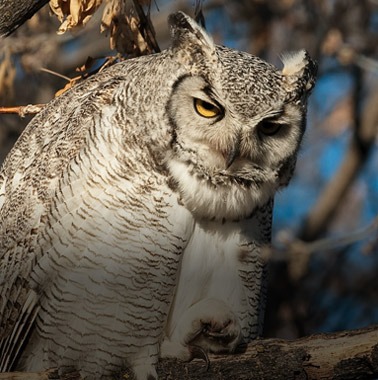
Typical owls are small to large solitary nocturnal birds of prey. They have large forward-facing eyes and ears, a hawk-like beak, and a conspicuous circle of feathers around each eye called a facial disk.
- Flammulated owl, Psiloscops flammeolus LC
- Western screech-owl, Megascops kennicottii LC
- Eastern screech-owl, Megascops asio LC
- Great horned owl, Bubo virginianus LC
- Snowy owl, Bubo scandiacus VU
- Northern hawk owl, Surnia ulula LC
- Northern pygmy-owl, Glaucidium gnoma LC
- Burrowing owl, Athene cunicularia LC
- Spotted owl, Strix occidentalis NT
- Barred owl, Strix varia LC
- Great grey owl, Strix nebulosa LC
- Long-eared owl, Asio otus LC
- Short-eared owl, Asio flammeus LC
- Boreal owl, Aegolius funereus LC
- Northern saw-whet owl, Aegolius acadicus LC
Kingfishers
Order: Coraciiformes Family: Alcedinidae
Kingfishers are medium-sized birds with large heads, long, pointed bills, short legs, and stubby tails.
- Belted kingfisher, Megaceryle alcyon LC
Woodpeckers
Order: Piciformes Family: Picidae
Woodpeckers are small to medium-sized birds with chisel-like beaks, short legs, stiff tails, and long tongues used for capturing insects. Some species have feet with two toes pointing forward and two backward, while several species have only three toes. Many woodpeckers have the habit of tapping noisily on tree trunks with their beaks.
- Lewis's woodpecker, Melanerpes lewis LC
- Red-headed woodpecker, Melanerpes erythrocephalus LC
- Acorn woodpecker, Melanerpes formicivorus (A) LC
- Red-bellied woodpecker, Melanerpes carolinus LC
- Williamson's sapsucker, Sphyrapicus thyroideus LC
- Yellow-bellied sapsucker, Sphyrapicus varius LC
- Red-naped sapsucker, Sphyrapicus nuchalis LC
- Red-breasted sapsucker, Sphyrapicus ruber LC
- American three-toed woodpecker, Picoides dorsalis LC
- Black-backed woodpecker, Picoides arcticus LC
- Downy woodpecker, Dryobates pubescens LC
- Hairy woodpecker, Dryobates villosus LC
- White-headed woodpecker, Dryobates albolarvatus LC
- Northern flicker, Colaptes auratus LC
- Pileated woodpecker, Dryocopus pileatus LC
Falcons and caracaras
Order: Falconiformes Family: Falconidae
Falconidae is a family of diurnal birds of prey, notably the falcons and caracaras. They differ from hawks, eagles, and kites in that they kill with their beaks instead of their talons.
- Crested caracara, Caracara plancus (A) LC
- Eurasian kestrel, Falco tinnunculus (A) LC
- American kestrel, Falco sparverius LC
- Merlin, Falco columbarius LC
- Gyrfalcon, Falco rusticolus LC
- Peregrine falcon, Falco peregrinus LC
- Prairie falcon, Falco mexicanus LC
Tyrant flycatchers
Order: Passeriformes Family: Tyrannidae
Tyrant flycatchers are Passerine birds which occur throughout North and South America. They superficially resemble the Old World flycatchers, but are more robust and have stronger bills. They do not have the sophisticated vocal capabilities of the songbirds. Most, but not all, are rather plain. As the name implies, most are insectivorous.
Vireos, shrike-babblers, and erpornis
Order: Passeriformes Family: Vireonidae
The vireos are a group of small to medium-sized passerine birds. They are typically greenish in colour and resemble wood warblers, apart from their heavier bills.
- Black-capped vireo, Vireo atricapilla (A) NT
- White-eyed vireo, Vireo griseus LC
- Bell's vireo, Vireo bellii (A) NT
- Hutton's vireo, Vireo huttoni LC
- Yellow-throated vireo, Vireo flavifrons LC
- Cassin's vireo, Vireo cassinii LC
- Blue-headed vireo, Vireo solitarius LC
- Plumbeous vireo, Vireo plumbeus (A) LC
- Philadelphia vireo, Vireo philadelphicus LC
- Warbling vireo, Vireo gilvus LC
- Red-eyed vireo, Vireo olivaceus LC
- Yellow-green vireo, Vireo flavoviridis (A) LC
Shrikes
Order: Passeriformes Family: Laniidae
Shrikes are passerine birds known for their habit of catching other birds and small animals and impaling the uneaten portions of their bodies on thorns. A shrike's beak is hooked, like that of a typical bird of prey.
- Brown shrike, Lanius cristatus (A) LC
- Red-backed shrike, Lanius collurio (A) LC
- Loggerhead shrike, Lanius ludovicianus NT
- Northern shrike, Lanius borealis LC
Crows, jays, and magpies
Order: Passeriformes Family: Corvidae
The family Corvidae includes crows, ravens, jays, choughs, magpies, treepies, nutcrackers, and ground jays. Corvids are above average in size among the Passeriformes, and some of the larger species show high levels of intelligence.
- Canada jay, Perisoreus canadensis LC
- Pinyon jay, Gymnorhinus cyanocephalus (A) VU
- Steller's jay, Cyanocitta stelleri LC
- Blue jay, Cyanocitta cristata LC
- California scrub-jay, Aphelocoma californica (A) (Not yet assessed by the IUCN)
- Woodhouse's scrub-jay, Aphelocoma woodhouseii (A) (Not yet assessed by the IUCN)
- Clark's nutcracker, Nucifraga columbiana LC
- Black-billed magpie, Pica hudsonia LC
- Eurasian jackdaw, Corvus monedula (A) LC
- American crow, Corvus brachyrhynchos LC
- Fish crow, Corvus ossifragus (A) LC
- Chihuahuan raven, Corvus cryptoleucus (A) LC
- Common raven, Corvus corax LC
Tits, chickadees, and titmice
Order: Passeriformes Family: Paridae
The Paridae are mainly small stocky woodland species with short stout bills. Some have crests. They are adaptable birds, with a mixed diet including seeds and insects.
- Carolina chickadee, Poecile carolinensis LC
- Black-capped chickadee, Poecile atricapillus LC
- Mountain chickadee, Poecile gambeli LC
- Chestnut-backed chickadee, Poecile rufescens LC
- Boreal chickadee, Poecile hudsonicus LC
- Grey-headed chickadee, Poecile cinctus LC
- Tufted titmouse, Baeolophus bicolor LC
Larks
Order: Passeriformes Family: Alaudidae
Larks are small terrestrial birds with often extravagant songs and display flights. Most larks are fairly dull in appearance. They feed on insects and seeds.
- Eurasian skylark, Alauda arvensis LC
- Horned lark, Eremophila alpestris LC
Swallows
Order: Passeriformes Family: Hirundinidae
The family Hirundinidae is adapted to aerial feeding. They have a slender streamlined body, long pointed wings, and a short bill with a wide gape. The feet are adapted to perching rather than walking, and the front toes are partially joined at the base.
- Bank swallow, Riparia riparia LC
- Tree swallow, Tachycineta bicolor LC
- Violet-green swallow, Tachycineta thalassina LC
- Northern rough-winged swallow, Stelgidopteryx serripennis LC
- Purple martin, Progne subis LC
- Barn swallow, Hirundo rustica LC
- Common house-martin, Delichon urbicum (A) LC
- Cliff swallow, Petrochelidon pyrrhonota LC
- Cave swallow, Petrochelidon fulva LC
Long-tailed tits
Order: Passeriformes Family: Aegithalidae
The long-tailed tits are a family of small passerine birds. Their plumage is typically dull grey or brown in colour. There is only one North American representative of this primarily Palearctic family.
- Bushtit, Psaltriparus minimus LC
Leaf warblers
Order: Passeriformes Family: Phylloscopidae
Leaf warblers are a family of small insectivorous birds found mostly in Eurasia and ranging into Wallacea and Africa. The Arctic warbler breeds east into Alaska. The species are of various sizes, often green-plumaged above and yellow below, or more subdued with greyish-green to greyish-brown colours.
- Yellow-browed warbler, Phylloscopus inornatus (A) LC
- Arctic warbler, Phylloscopus borealis (A) LC
- Kamchatka leaf warbler, Phylloscopus examinandus (A) LC
Kinglets
Order: Passeriformes Family: Regulidae
The kinglets are a small family of birds which resemble the titmice. They are very small, insectivorous birds. The adults have coloured crowns, giving rise to their name.
- Ruby-crowned kinglet, Corthylio calendula LC
- Golden-crowned kinglet, Regulus satrapa LC
Waxwings
Order: Passeriformes Family: Bombycillidae
The waxwings are a group of birds with soft silky plumage and unique red tips to some of the wing feathers. In the Bohemian and cedar waxwings, these tips look like sealing wax and give the group its name. These are arboreal birds of northern forests. They live on insects in the summer and berries in winter.
- Bohemian waxwing, Bombycilla garrulus LC
- Cedar waxwing, Bombycilla cedrorum LC
Silky-flycatchers
Order: Passeriformes Family: Ptiliogonatidae
The silky flycatchers are a small family of passerine birds which occur mainly in Central America. They are related to waxwings and most species have small crests.
- Phainopepla, Phainopepla nitens (A) LC
Nuthatches
Order: Passeriformes Family: Sittidae
Nuthatches are small woodland birds. They have the unusual ability to climb down trees head first, unlike other birds, which can only go upwards. Nuthatches have large heads, short tails, and powerful bills and feet.
- Red-breasted nuthatch, Sitta canadensis LC
- White-breasted nuthatch, Sitta carolinensis LC
- Pygmy nuthatch, Sitta pygmaea LC
Treecreepers
Order: Passeriformes Family: Certhiidae
Treecreepers are small woodland birds, brown above and white below. They have thin, down-pointed, curved bills, which they use to extricate insects from bark. They have stiff tail feathers, like woodpeckers, which they use to support themselves vertically on trees.
- Brown creeper, Certhia americana LC
Gnatcatchers
Order: Passeriformes Family: Polioptilidae
These dainty birds resemble Old World warblers in their structure and habits, moving restlessly through the foliage seeking insects. The gnatcatchers are mainly soft bluish grey in colour and have the typical insectivore's long, sharp bill. Many species have distinctive black head patterns (especially males) and long, regularly cocked, black-and-white tails.
- Blue-grey gnatcatcher, Polioptila caerulea LC
Wrens
Order: Passeriformes Family: Troglodytidae
Wrens are small and inconspicuous birds, except for their loud songs. They have short wings and thin down-turned bills. Several species often hold their tails upright. All are insectivorous.
- Rock wren, Salpinctes obsoletus LC
- Canyon wren, Catherpes mexicanus LC
- House wren, Troglodytes aedon LC
- Pacific wren, Troglodytes pacificus LC
- Winter wren, Troglodytes hiemalis LC
- Sedge wren, Cistothorus platensis LC
- Marsh wren, Cistothorus palustris LC
- Carolina wren, Thryothorus ludovicianus LC
- Bewick's wren, Thryomanes bewickii LC
Mockingbirds and thrashers
Order: Passeriformes Family: Mimidae
The mimids are a family of passerine birds which includes thrashers, mockingbirds, tremblers, and the New World catbirds. These birds are notable for their vocalization, especially their remarkable ability to mimic a wide variety of birds and other sounds heard outdoors. The species tend towards dull greys and browns in their appearance.
- Grey catbird, Dumetella carolinensis LC
- Curve-billed thrasher, Toxostoma curvirostre (A) LC
- Brown thrasher, Toxostoma rufum LC
- Bendire's thrasher, Toxostoma bendirei (A) VU
- Sage thrasher, Oreoscoptes montanus LC
- Northern mockingbird, Mimus polyglottos LC
Starlings
Order: Passeriformes Family: Sturnidae
Starlings and mynas are small to medium-sized Old World passerine birds with strong feet. Their flight is strong and direct and most are very gregarious. Their preferred habitat is fairly open country, and they eat insects and fruit. The plumage of several species is dark with a metallic sheen.
- European starling, Sturnus vulgaris (I) LC
- Crested myna, Acridotheres cristatellus (I) (Ex) LC
Dippers
Order: Passeriformes Family: Cinclidae
Dippers are named for their bobbing or dipping movements. They are unique among passerines for their ability to dive and swim underwater.
- American dipper, Cinclus mexicanus LC
Thrushes and allies
Order: Passeriformes Family: Turdidae
The thrushes are a group of passerine birds that occur mainly but not exclusively in the Old World. They are plump, soft plumaged, small to medium-sized insectivores or sometimes omnivores, often feeding on the ground. Many have attractive songs.
Old World flycatchers
Order: Passeriformes Family: Muscicapidae
This a large family of small passerine birds restricted to the Old World. Species below only occurs in Canada as vagrants. The appearance of these birds is highly varied, but they mostly have weak songs and harsh calls.
- Siberian rubythroat, Luscinia calliope (A) LC
- Bluethroat, Luscinia svecica LC
- Siberian blue robin, Luscinia cyane (A) LC
- Red-flanked bluetail, Tarsiger cyanurus (A) LC
- Blue rock-thrush, Monticola solitarius (A) LC
- Siberian stonechat, Saxicola maurus (A)
- Northern wheatear, Oenanthe oenanthe LC
Accentors
Order: Passeriformes Family: Prunellidae
Accentors are small, fairly drab species superficially similar, but unrelated to, sparrows. However, accentors have thin sharp bills, reflecting their diet of insects in summer, augmented with seeds and berries in winter.
- Siberian accentor, Prunella montanella (A) LC
Old World sparrows
Order: Passeriformes Family: Passeridae
Old World sparrows are small passerine birds. In general, sparrows tend to be small plump brownish or greyish birds with short tails and short powerful beaks. Sparrows are seed eaters, but they also consume small insects.
- House sparrow, Passer domesticus (I) LC
- Eurasian tree sparrow, Passer montanus (I) (A) LC
Wagtails and pipits
Order: Passeriformes Family: Motacillidae
Motacillidae is a family of small passerine birds with medium to long tails. They include the wagtails, longclaws, and pipits. They are slender ground-feeding insectivores of open country.
- Eastern yellow wagtail, Motacilla tschutschensis LC
- Citrine wagtail, Motacilla citreola (A) LC
- Grey wagtail, Motacilla cinerea (A) LC
- White wagtail, Motacilla alba (A) LC
- Red-throated pipit, Anthus cervinus (A) LC
- American pipit, Anthus rubescens LC
- Sprague's pipit, Anthus spragueii VU
Finches, euphonias, and allies
Order: Passeriformes Family: Fringillidae
Finches are seed-eating passerine birds that are small to moderately large and have a strong beak, usually conical and in some species very large. All have twelve tail feathers and nine primaries. These birds have a bouncing flight with alternating bouts of flapping and gliding on closed wings, and most sing well.
Longspurs and snow buntings
Order: Passeriformes Family: Calcariidae
The Calcariidae are a group of passerine birds which had been traditionally grouped with the New World sparrows, but differ in a number of respects and are usually found in open grassy areas.
- Lapland longspur, Calcarius lapponicus LC
- Chestnut-collared longspur, Calcarius ornatus NT
- Smith's longspur, Calcarius pictus LC
- Thick-billed longspur, Rhynchophanes mccownii LC
- Snow bunting, Plectrophenax nivalis LC
- McKay's bunting, Plectrophenax hyperboreus (A) LC
Old World buntings
Order: Passeriformes Family: Emberizidae
Emberizidae is a family of passerine birds containing a single genus. Until 2017, the New World sparrows (Passerellidae) were also considered part of this family.
- Pine bunting, Emberiza leucocephalos (A) LC
- Little bunting, Emberiza pusilla (A) LC
- Rustic bunting, Emberiza rustica (A) LC
- Yellow-breasted bunting, Emberiza aureola (A) CR
New World sparrows
Order: Passeriformes Family: Passerellidae
Until 2017, these species were considered part of the family Emberizidae. Most of the species are known as sparrows, but these birds are not closely related to the Old World sparrows which are in the family Passeridae. Many of these have distinctive head patterns.
Yellow-breasted chat
Order: Passeriformes Family: Icteriidae
This species was historically placed in the wood-warblers (Parulidae) but nonetheless most authorities were unsure if it belonged there. It was placed in its own family in 2017.
- Yellow-breasted chat, Icteria virens
Troupials and allies
Order: Passeriformes Family: Icteridae
The icterids are a group of small to medium-sized, often colourful passerine birds restricted to the New World and include the grackles, New World blackbirds, and New World orioles. Most species have black as a predominant plumage colour, often enlivened by yellow, orange, or red.
New World warblers
Order: Passeriformes Family: Parulidae
The wood warblers are a group of small, often colourful passerine birds restricted to the New World. Most are arboreal, but some are more terrestrial. Most members of this family are insectivores.
Cardinals and allies
Order: Passeriformes Family: Cardinalidae
The cardinals are a family of robust, seed-eating birds with strong bills. They are typically associated with open woodlands. The sexes usually have distinct plumages.
- Hepatic tanager, Piranga flava (A) LC
- Summer tanager, Piranga rubra (A) LC
- Scarlet tanager, Piranga olivacea LC
- Western tanager, Piranga ludoviciana LC
- Northern cardinal, Cardinalis cardinalis LC
- Pyrrhuloxia, Cardinalis sinuatus (A) LC
- Rose-breasted grosbeak, Pheucticus ludovicianus LC
- Black-headed grosbeak, Pheucticus melanocephalus LC
- Blue grosbeak, Passerina caerulea (A) LC
- Lazuli bunting, Passerina amoena LC
- Indigo bunting, Passerina cyanea LC
- Varied bunting, Passerina versicolor (A) NT
- Painted bunting, Passerina ciris (A) NT
- Dickcissel, Spiza americana LC
Notes
References
See also
- List of birds
- Lists of birds by region
- List of North American birds
- List of mammals of Canada
- List of amphibians of Canada
- List of reptiles of Canada